RESEARCH
Funded Studies
RESEARCH
Funded Studies
Home ❯ Research ❯ Funded Studies
Enhanced AAV Vectors for Dysferlin Gene Delivery and Evaluation in a Dysferlin Deficient Mouse Model of Muscle Regeneration
Grant Duration
03/10 – 08/16
Objective
Application of Emerging AAV Vector Advancements for the Treatment of Dysferlinopathy.
AAV gene therapy approaches for the treatment of dysferlinopathy have demonstrated efficacy in animal models using dual vectors or fragmented preparations capable of mediating oversized gene transduction. These approaches, while effective and interesting from a basic genetic standpoint, suffer from decreased transduction efficiencies. In particular, our work has demonstrated a concentration dependent effect: there is a larger transduction deficit for a multiple vector approach when the vector genomes are diluted (i.e. in the liver) compared to intact AAV genome transduction (2). Given the likelihood of AAV vector administration via limb perfusion for the treatment of dysferlinopathy, the disseminated target (skeletal muscle), the current AAV production titers, and the host’s immune response to AAV vectors administered at high doses, a complementary strategy using AAV particles containing intact genomes encoding a truncated hybrid dysferlin molecule is under investigation. Current results suggest that this hybrid dysferlin functions in a manner similar to the full length dysferlin and importantly has yet to be associated with toxicity. Our preclinical studies herein seek to offer an AAV viral vector efficient for skeletal muscle transduction with the capacity to restore muscle integrity.
For additional information go to:
https://www.ncbi.nlm.nih.gov/pmc/articles/PMC3863795/
https://www.ncbi.nlm.nih.gov/pmc/articles/PMC5589059/
https://www.ncbi.nlm.nih.gov/pmc/articles/PMC5371557/
Project’s Researcher
Matthew Hirsch, PhD, University of North Carolina (Chapel Hill, NC)
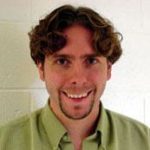
Dr. Hirsch is an assistant professor in the Department of Ophthamology at the University of North Carolina (Chapel Hill, NC) where he works closely with the laboratory of Jude Samulski at the UNC Gene Therapy Center.
Enhanced AAV Vectors for Dysferlin Gene Delivery and Evaluation in a Dysferlin Deficient Mouse Model of Muscle Regeneration
Grant Duration
03/10 – 08/16
Objective
Application of Emerging AAV Vector Advancements for the Treatment of Dysferlinopathy.
AAV gene therapy approaches for the treatment of dysferlinopathy have demonstrated efficacy in animal models using dual vectors or fragmented preparations capable of mediating oversized gene transduction. These approaches, while effective and interesting from a basic genetic standpoint, suffer from decreased transduction efficiencies. In particular, our work has demonstrated a concentration dependent effect: there is a larger transduction deficit for a multiple vector approach when the vector genomes are diluted (i.e. in the liver) compared to intact AAV genome transduction (2). Given the likelihood of AAV vector administration via limb perfusion for the treatment of dysferlinopathy, the disseminated target (skeletal muscle), the current AAV production titers, and the host’s immune response to AAV vectors administered at high doses, a complementary strategy using AAV particles containing intact genomes encoding a truncated hybrid dysferlin molecule is under investigation. Current results suggest that this hybrid dysferlin functions in a manner similar to the full length dysferlin and importantly has yet to be associated with toxicity. Our preclinical studies herein seek to offer an AAV viral vector efficient for skeletal muscle transduction with the capacity to restore muscle integrity.
For additional information go to:
https://www.ncbi.nlm.nih.gov/pmc/articles/PMC3863795/
https://www.ncbi.nlm.nih.gov/pmc/articles/PMC5589059/
https://www.ncbi.nlm.nih.gov/pmc/articles/PMC5371557/
Project’s Researcher
Matthew Hirsch, PhD, University of North Carolina (Chapel Hill, NC)
Dr. Hirsch is an assistant professor in the Department of Ophthamology at the University of North Carolina (Chapel Hill, NC) where he works closely with the laboratory of Jude Samulski at the UNC Gene Therapy Center.


