Introducing the R1925X Mouse!
The Jain Foundation has a new type
of mouse on offer to researchers.
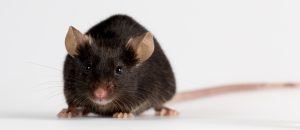
Introducing the R1925X Mouse!
The BlaJ mouse, developed by Isabelle Richard by crossing the naturally occurring A/J dysferlin mutation onto the C57Bl6 mouse commonly used as a wild-type control strain, has been widely used in dysferlinopathy research. The Jain Foundation has shipped hundreds of BlaJ mice from our private colony at Jackson Laboratories to dysferlin researchers around the world in each of the past several years.
However, the BlaJ isn’t the ideal mouse strain for every preclinical study of dysferlinopathy. Its DYSF mutation consists of a retrotransposon inserted into Intron 4, which prevents correct splicing. While completely ablating dysferlin expression, this mutation isn’t amenable to research focused on point mutations including stop codon readthrough, gene editing, or rescue of missense mutations by chaperones.
In order to provide another mouse model for researchers, the Jain Foundation has developed the R1925X mouse. This mouse has a nonsense mutation generated by CRISPR on a C57Bl6 background. This is the mouse equivalent of the human R1905X mutation described by Vilchez et al. The different numbering (1925 vs. 1905) is due to a different dysferlin isoform being used as the reference sequence in the mouse. The base change in the human sequence (c.5713C>T) converts a CGA codon for arginine to a TGA stop. The mouse sequence uses a CGT codon for arginine at this location, so two base pair changes (c.5773C>T and c.5775T>A) were required to create a stop in the R1925X mouse.
This new strain is available free of charge to any interested researcher through the Jain Foundation’s private colony at Jackson Labs using the same protocol we use to provide the BlaJ mice (see instructions here). Initial characterization of the R1925X mouse model was described by Bouchard et al. Because the progression of dysferlinopathy occurs slowly in mice, characterization of the mouse’s phenotype is ongoing. However, this new strain has been shown to be null for dysferlin expression, like the BlaJ mouse, and is on the same genetic background, so the phenotype is not expected to be different from that of the BlaJ.
Multiple patient-derived cell lines compound heterozygous for the c.5713C>T; p.R1905X mutation and a different second pathogenic DYSF variant are also available. The JFNY iPS line at WiCell is from a patient heterozygous for the c.5713C>T mutation. In addition, immortalized fibroblast or MyoD converted immortalized fibroblast cell lines are available from a different patient who is also a compound heterozygote for the c.5713C>T DYSF mutation.
For more information about the R1925X mouse or R1905X cell lines, please contact the Jain Foundation at admin@jain-foundation.org.


