RESEARCH
Funded Studies
RESEARCH
Funded Studies
Home ❯ Research ❯ Funded Studies
Mapping the Dysferlin Structure and Interactome
Grant Duration
09/17 – 10/23
We have applied crosslinking-mass spectrometry on exogenously expressed, purified dysferlin. The results we obtained strongly indicated, as supported by results from other groups and by AlphaFold predictions, that while the domains making up this dysferlin appear correctly folded, in the absence of its normal interacting partners dysferlin assumes a “beads on a string” flexible conformation. Hence, we needed to develop tools to examine dysferlin and its interactors from a native environment.
To generate reagents that could capture dysferlin when released from a native cell environment, we made “nanobodies” from camelids (llamas), nanobodies being the smallest monoclonal antibodies that can be made and that have numerous advantages in terms of stability and ease of manufacture and use. We successfully immunized llamas who raised a strong response against human dysferlin. These animals represent an ongoing resource for re-screening for new nanobodies, and as a source of polyclonal sera. From them, we isolated four lead well-performing anti-dysferlin nanobodies, termed LaD17, LaD20, LaD35, and LaD40. Each specifically recognizes dysferlin by immunoblotting and immunofluorescence microscopy. These have also proven to be extremely potent affinity capture reagents, able to purify native dysferlin and its interacting partners ex vivo.
We subsequently optimized our cell cryomilling, solubilization, and macromolecular complex stabilization methodologies around these nanobodies, allowing us to isolate full dysferlin interactomes from myotube (muscle proxy) cells. Importantly, our methodology now includes an ultrafast cell freeze and harvest method that permits preservation of cells immediately after induction of wounding. Combined with the use of glutaraldehyde crosslinking to stabilize protein complexes, this allowed us to capture dysferlin interactomes from a resting state and after stimulation by membrane wounding, including weak or transient interactors. These interactomes proved to be rich, and as a key point contained known dysferlin-interacting proteins such as myoferlin, desmin, annexins, and caveolin-3. We have identified numerous proteins specifically enriched with dysferlin after wounding, including mitochondrial and vesicular transport factors, suggesting new interactions that may mediate dysferlin’s role in wound response.
Project’s Researcher
Brian Chait, D.Phil and Michael Rout, PhD, Rockefeller University
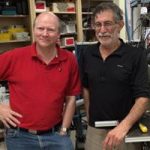
Brian Chait, D.Phil., is the Camille and Henry Dreyfus Professor at the Rockefeller University in New York and head of the Laboratory for Mass Spectrometry and Gaseous Ion Chemistry. He specializes in the development and use of mass spectrometry as a tool for investigating a variety of biological and biochemical phenomena.
Michael Rout, Ph.D., is the George and Ruby deStevens Professor at the Rockefeller University and head of the Laboratory of Cellular and Structural Biology. He uses biochemical, biophysical, and structural approaches to characterize macromolecular assemblies, with an emphasis on the nuclear pore complex, a key part of the pathway that relays information between the nucleus and cytoplasm. His goal is to further develop proteomic technologies that will enable the community to assemble detailed, dynamic representations of the interactions in the cell.
Mapping the Dysferlin Structure and Interactome
Grant Duration
09/17 – 10/23
We have applied crosslinking-mass spectrometry on exogenously expressed, purified dysferlin. The results we obtained strongly indicated, as supported by results from other groups and by AlphaFold predictions, that while the domains making up this dysferlin appear correctly folded, in the absence of its normal interacting partners dysferlin assumes a “beads on a string” flexible conformation. Hence, we needed to develop tools to examine dysferlin and its interactors from a native environment.
To generate reagents that could capture dysferlin when released from a native cell environment, we made “nanobodies” from camelids (llamas), nanobodies being the smallest monoclonal antibodies that can be made and that have numerous advantages in terms of stability and ease of manufacture and use. We successfully immunized llamas who raised a strong response against human dysferlin. These animals represent an ongoing resource for re-screening for new nanobodies, and as a source of polyclonal sera. From them, we isolated four lead well-performing anti-dysferlin nanobodies, termed LaD17, LaD20, LaD35, and LaD40. Each specifically recognizes dysferlin by immunoblotting and immunofluorescence microscopy. These have also proven to be extremely potent affinity capture reagents, able to purify native dysferlin and its interacting partners ex vivo.
We subsequently optimized our cell cryomilling, solubilization, and macromolecular complex stabilization methodologies around these nanobodies, allowing us to isolate full dysferlin interactomes from myotube (muscle proxy) cells. Importantly, our methodology now includes an ultrafast cell freeze and harvest method that permits preservation of cells immediately after induction of wounding. Combined with the use of glutaraldehyde crosslinking to stabilize protein complexes, this allowed us to capture dysferlin interactomes from a resting state and after stimulation by membrane wounding, including weak or transient interactors. These interactomes proved to be rich, and as a key point contained known dysferlin-interacting proteins such as myoferlin, desmin, annexins, and caveolin-3. We have identified numerous proteins specifically enriched with dysferlin after wounding, including mitochondrial and vesicular transport factors, suggesting new interactions that may mediate dysferlin’s role in wound response.
Project’s Researcher
Brian Chait, D.Phil and Michael Rout, PhD, Rockefeller University
Brian Chait, D.Phil., is the Camille and Henry Dreyfus Professor at the Rockefeller University in New York and head of the Laboratory for Mass Spectrometry and Gaseous Ion Chemistry. He specializes in the development and use of mass spectrometry as a tool for investigating a variety of biological and biochemical phenomena.
Michael Rout, Ph.D., is the George and Ruby deStevens Professor at the Rockefeller University and head of the Laboratory of Cellular and Structural Biology. He uses biochemical, biophysical, and structural approaches to characterize macromolecular assemblies, with an emphasis on the nuclear pore complex, a key part of the pathway that relays information between the nucleus and cytoplasm. His goal is to further develop proteomic technologies that will enable the community to assemble detailed, dynamic representations of the interactions in the cell.


